R Resources for Psychologists

R Resources for Psychology Researchers

Good resources for learning R as a Psychologist are hard to find. By that, I mean that there are so many great sites and blogs to learn R. Thus, it may be hard to find learning resources that target Psychology researchers.

Outline

The structure of this post is as follows. First, we start by getting a quick answer to the question “what is R?”. After this, we will briefly discuss good books you can use to learn R. In the next section, we will go into two other types of R resources: namely, tutorials and how-tos. This section will start by giving you some general resources and then list some R tutorials (many from this blog), and then, finally, you will get some Psychology specific R resources to learn from.

What is R?

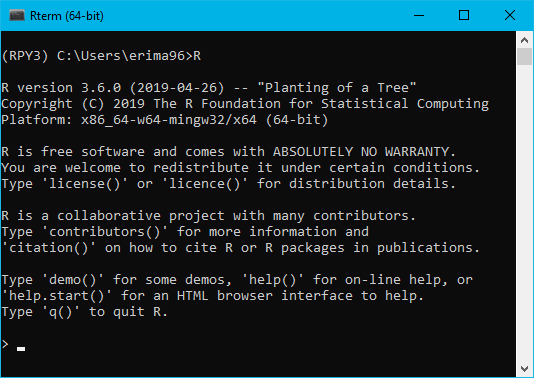
If you are new to R, you might wonder what R is. R is a free and open-source programming language and environment. Data analysis in R is carried out by writing scripts and functions. Finally, R is a complete, interactive, and object-oriented language.
R Books for Psychologists

Recently I wrote about four good R books targeted at Psychology students and researchers (i.e., R books for Psychologists). There are, however, of course, other good resources for Psychological researchers to learn R programming.

Therefore, this post will list some of the best blogs and sites to learn R.  The post will be divided into two categories; general and Psychology focused R sites and blogs. For those who are not familiar with R, I will start with a brief introduction on what R is (if you know R already; click here to skip to the links).
Read more

What programming language should I learn – 2

I recently asked which programming language I should learn next year (i.e., 2016). In this post I will evaluate the alternatives that I have by asking the question in different places around the internet. The post will end with the choice I made and how to install the language

To summarize my earlier post, I mainly use programming for creating Psychology experiments and, thus,  need a powerful language. Furthermore, in Psychological experiments stimuli are typically being presented (e.g., sounds, images, text, or video). Responses need to be collected from the keyboard, mouse and specially built equipment (e.g., via USB; Arduino). For some experiments timing of the presentation and collection of responses might be significant.  The language should, of course, be free, open source, and work on a computer running Windows, Linux, and OS-X. However, mobile platforms such as Smartphones and Tablets might also be interesting in the future. Note that all languages considered are more or less general purpose languages and might, therefore, be attractive to anyone that want to extend their stack and learn a new programming language 2016.

One of the most valuable answers I got was that I should look for a functional language.

Read more

What programming language should I learn?

What programming language should I learn?

I am getting better at writing Python code, and I am starting to feel an itch to extend my toolbox and learn more about programming. Therefore, one step in that direction is to learn a new programming language next year (i.e., 2016). I want to learn a relatively new language, and it should not be … Read more